
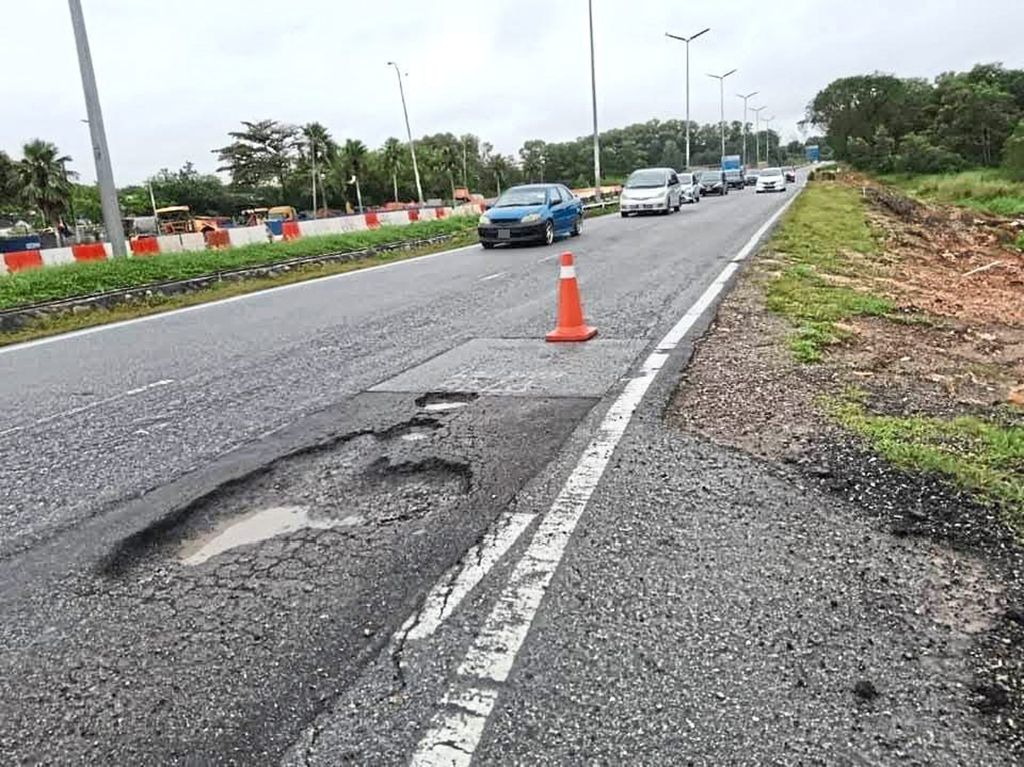
Industrial estate roads are essential to daily business operations. They support heavy goods vehicles, delivery trucks, forklifts, employee transport and the movement of raw materials and finished products.
Unlike lightly trafficked residential roads, industrial access roads often experience repeated loading from heavy vehicles. Over time, this pressure, combined with weather exposure, drainage problems and pavement deterioration, can cause the road surface to fail.
Ignoring the early warning signs can lead to more extensive repairs, vehicle damage, safety concerns and unexpected interruptions to logistics.
Recognising when an industrial estate road needs resurfacing allows property owners, facility managers and industrial park operators to plan maintenance before the problem becomes more expensive to resolve.
1. Alligator Cracking Across the Road Surface
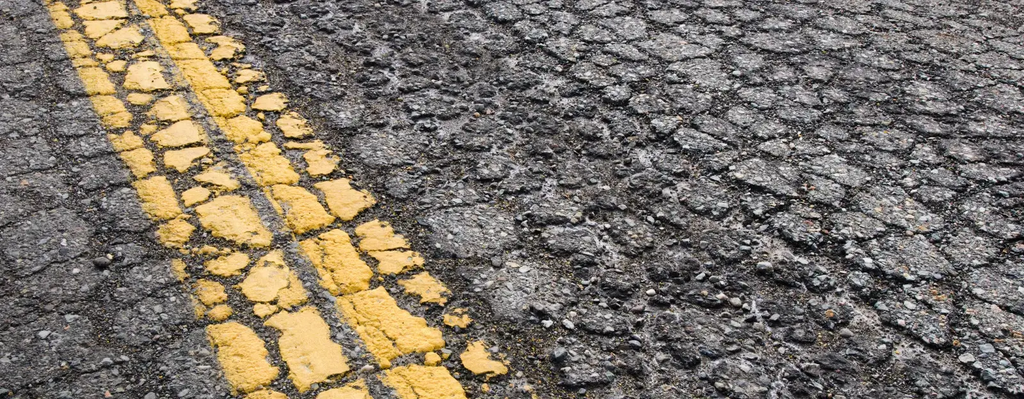
Alligator cracking, also known as fatigue cracking, appears as a network of interconnected cracks resembling reptile scales.
It is one of the more important warning signs to investigate on roads carrying frequent heavy vehicle traffic.
What causes alligator cracking?
Common contributing factors include:
- Repeated heavy axle loads.
- Insufficient pavement thickness or structural capacity.
- A weakened or poorly supported pavement base.
- Water entering through cracks and damaging underlying layers.
- Deterioration associated with an ageing pavement structure.
Why does it matter?
Alligator cracking may indicate that the pavement is experiencing structural fatigue rather than simply surface ageing.
Applying a new asphalt layer over a severely deteriorated section without addressing the underlying cause may only provide temporary improvement. The cracks can return as movement and stresses continue beneath the new surface.
A professional assessment should determine whether the affected area needs localised excavation and reconstruction, structural strengthening or a broader resurfacing treatment.
2. Rutting Along Vehicle Wheel Paths
Rutting occurs when longitudinal depressions develop along the paths repeatedly travelled by vehicle wheels.
It is particularly relevant to industrial estates where heavy trucks follow the same routes between loading bays, warehouses, factories and main access roads.
Common causes of rutting
Rutting can develop because of permanent deformation in the asphalt layers, inadequate compaction, weak underlying materials or excessive loading relative to the pavement’s design.
Poor drainage and high pavement temperatures can also contribute, depending on the pavement materials and site conditions.
How rutting affects industrial operations
Deep or progressive wheel-path depressions can collect water during rain, affect vehicle handling and create uneven driving conditions. They may also complicate manoeuvring near loading docks and turning areas.
A site inspection should establish the depth and extent of the rutting and identify whether the deformation is limited to the surface or extends into the underlying pavement layers.
Depending on the findings, repairs may involve milling and replacing the affected asphalt, correcting underlying deformation or reconstructing the damaged section.
3. Potholes and Repeated Patch Failures
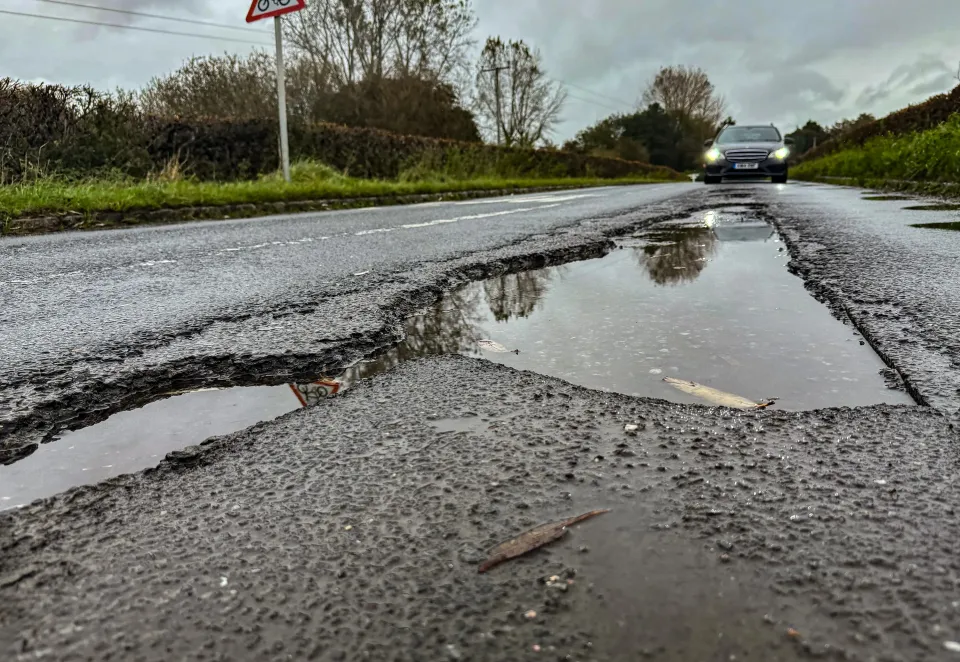
Potholes form when weakened pavement material breaks away, often following a combination of cracking, moisture penetration and traffic loading.
In industrial areas, repeated braking, turning and stationary vehicle loads can place additional stress on pavement sections around junctions, loading areas and entrances.
A single pothole may initially appear manageable. However, repeated potholes or patches that fail soon after repair can indicate a more persistent problem.
Warning signs to look for
- Potholes returning at the same location.
- Repairs breaking apart around their edges.
- Loose asphalt aggregate across the road.
- Multiple patches with different settlement levels.
- Water collecting in depressions after rainfall.
Repeated patch failure should prompt an investigation into the original cause. Simply filling each new pothole may not resolve weak pavement layers, drainage defects or inadequate support beneath the surface.
4. Water Ponding and Drainage Problems
Water is a significant consideration in road maintenance in Malaysia, where frequent rainfall can expose weaknesses in pavement surfaces and drainage systems.
Water that remains on the road after rainfall may indicate uneven surfaces, blocked drains, inadequate gradients or localised settlement.
When water enters pavement cracks or travels into vulnerable underlying layers, it can contribute to loss of support and accelerate deterioration under traffic.
What should property managers inspect?
Check for standing water, blocked roadside drains, damaged drain covers, settlement near kerbs and cracks that appear to allow water into the pavement.
Drainage improvements may be necessary alongside resurfacing. Otherwise, a newly laid asphalt surface may deteriorate prematurely if the underlying moisture problem remains unresolved.
5. Settlement, Depressions and Exposed Road Base
A road that appears uneven, sinks near service trenches or develops depressions under repeated loading may be experiencing more than ordinary surface wear.
Possible causes include inadequate compaction, settlement of reinstated trenches, weak subgrade materials, water-related deterioration or insufficient structural support.
In some cases, the underlying road base may become exposed as the asphalt layer breaks down.
These conditions require careful assessment because surface resurfacing alone may not restore the pavement’s structural capacity.
Where base failure is confirmed, the damaged materials may need to be removed and replaced before a new wearing course is installed.
When Is Resurfacing Enough, and When Is Reconstruction Necessary?
Not every damaged industrial road requires complete reconstruction. The appropriate treatment depends on the condition of the asphalt, the strength of the underlying layers, drainage, traffic loading and the extent of deterioration.
| Road condition | Potential treatment |
|---|---|
| Minor surface wear with a sound pavement structure | Surface treatment or resurfacing, where suitable |
| Localised potholes and isolated damaged areas | Localised repairs and patching |
| Surface deformation limited to the asphalt layer | Milling and asphalt replacement, subject to assessment |
| Extensive alligator cracking with structural weakness | Localised or full-depth pavement reconstruction |
| Settlement or recurring failure associated with drainage | Drainage correction and appropriate pavement repairs |
These are general indications, not a substitute for a site-specific pavement assessment.
The Business Cost of Delayed Road Maintenance
Poor industrial road conditions can affect more than the pavement itself.
Potential consequences include vehicle suspension and tyre damage, slower truck movements, increased maintenance costs, safety risks and disruptions around loading and unloading areas.
Unplanned repairs can also require temporary traffic restrictions, which may affect deliveries and warehouse schedules.
A planned maintenance programme helps operators identify deterioration early, prioritise high-risk sections and coordinate repairs around operational requirements.
How to Plan an Industrial Estate Resurfacing Project
Before arranging resurfacing, industrial estate operators should:
- Inspect the entire road network and record visible defects.
- Identify high-traffic routes and areas used by heavy vehicles.
- Assess drainage and investigate recurring failures.
- Determine whether surface repairs or structural reconstruction are required.
- Plan work zones to minimise disruption to deliveries and site access.
- Confirm the proposed asphalt specification, workmanship and quality-control requirements.
- Arrange inspections and documentation before accepting the completed work.
Conclusion
Alligator cracking, rutting, recurring potholes, water ponding and pavement settlement are important warning signs that an industrial estate road may require maintenance or resurfacing.
Addressing these issues early can help reduce operational disruption and prevent minor defects from developing into more extensive pavement failures.
Need to assess a deteriorating industrial road? Contact Roadworks.my to discuss road repairs, asphalt resurfacing and reinstatement requirements for your industrial or commercial property.
-
PHONE
+6016 295 4046
-
LOCATION
Subang Jaya, Selangor
-
SAY HELLO
roadworks@solara.my